Recent events have shattered the illusion that you control your smart home security. The convenience of a video doorbell is no longer worth the price of admission into a sprawling surveillance state.
15 February 2026
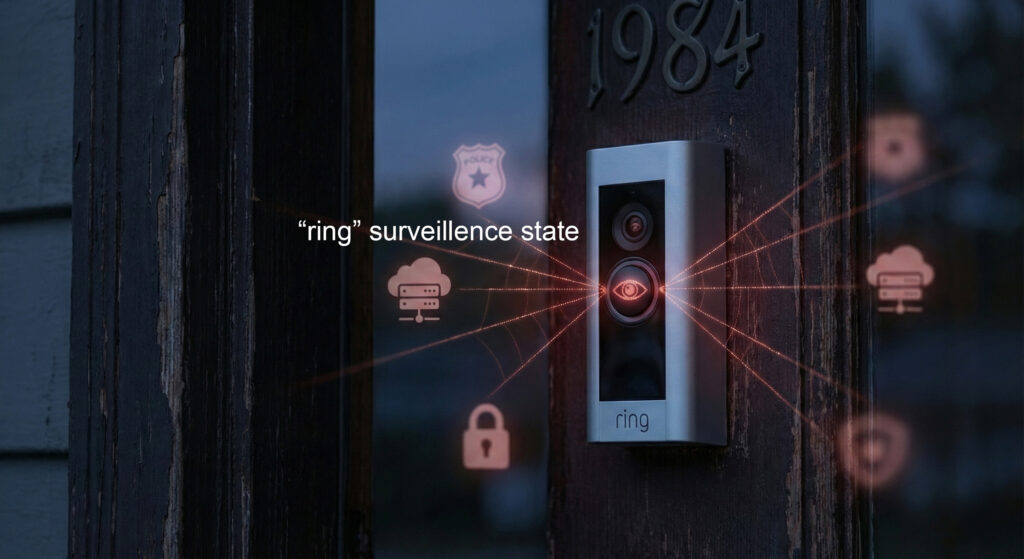
For millions of homeowners, the Ring doorbell chime is the sound of modern security. It’s a comforting digital barrier against package thieves and unsolicited visitors, offered at an affordable price point. We clip coupons, we install the app, and we feel safer.
But that feeling of safety is becoming an expensive illusion.
In the wake of disturbing new revelations about data retention and the persistent ties between tech companies and law enforcement, it has become clear that these devices are not just private security tools. They are nodes in a vast, privately owned surveillance network that haemorrhages user privacy.
If you currently use a Ring camera, or any similar cloud-based home security device, it is time to have a very uncomfortable conversation about what you are actually inviting into your home—and your neighborhood. Here is why the risks now far outweigh the rewards.
The “Disconnected” Lie: You Are Never Truly Offline
Perhaps the most terrifying revelation in recent weeks came not from a Ring device, but a competitor, shedding light on industry-wide practices. During the investigation into the kidnapping of Nancy Guthrie’s mother, the FBI obtained crucial footage from a neighbor’s Google Nest camera.
The terrifying part? The camera was disconnected. The homeowner did not have an active subscription. They believed the device was essentially a paperweight.
They were wrong. The investigation revealed that these devices can retain “residual data” in their backend systems—data accessible to the company and, by extension, law enforcement with a warrant—long after the user thinks the device is inactive.
This shatters the foundational trust between user and platform. If you cannot guarantee that “off” means “off,” or that “unsubscribed” means “not recording,” you have zero control over the device on your wall. Every Ring user must now assume that their data exists in a state of permanent potential access by third parties, regardless of their subscription status.
The Police Partnership Shell Game
For years, privacy advocates have sounded the alarm over Ring’s cozy relationship with police departments through its “Neighbors” app. Ring essentially created a warrantless surveillance dragnet, allowing police to request footage from entire neighborhoods with a click.
Recently, facing intense backlash, Ring made a public show of canceling a planned integration with Flock Safety, a controversial police automated license plate reader company. It looked like a win for privacy.
It was a smokescreen. While the Flock deal is dead, reports from The Verge confirm that Ring maintains its deep integration with Axon—the central provider of police body cameras and digital evidence management systems nationwide. A clear indication there are significant ties with Ring and government departments.
By keeping the Axon pipeline open, Ring ensures that the infrastructure linking your front porch video to police databases remains intact. The mechanism for mass surveillance hasn’t been dismantled; it’s just been quieter. As long as that pipeline exists, your camera is potentially acting as an agent of the state.
Normalizing the Neighborhood Panopticon
Ring’s marketing cleverly disguises surveillance as “community.” Their recent ad, featuring a “Search Party” feature where neighbors unite their cameras to find a lost dog, was meant to be heartwarming. Instead, many viewers found it dystopian.
The ad inadvertently highlighted the end game of this technology: a world where you cannot walk your dog, check your mail, or have a private conversation on your porch without being recorded by a dozen different overlapping camera angles owned by your neighbors.
By participating in this network, you aren’t just securing your own home. You are contributing to a culture where public anonymity is destroyed. You are forcing your neighbors, delivery drivers, and passersby onto a digital registry without their consent.
The Question You Must Ask
We exchanged our privacy for convenience without reading the terms of service. Now, the bill is coming due.
We know that Amazon employees have previously been caught accessing user feeds. We know that hackers find these devices irresistible targets. And we know now, definitively, that the “off” switch is a lie and the police pipeline is open.
Is the ability to see a delivery driver drop off a package from your office really worth participating in this architecture of surveillance?
If you value control over your own data, the privacy of your family, and the anonymity of your community, the answer is almost certainly no. It is time to reconsider the digital eyes on your doorframe. The safest move may be to unplug them for good.
Further Reading:
- The Guardian | The problem with doorbell cams: Nancy Guthrie case and Ring Super Bowl ad reawaken surveillance fears (Feb 14, 2026)
- The Verge | Ring Flock partnership breakup does not fix problems (Feb 14, 2026)
Historical Context & Evidence
- Federal Trade Commission | FTC Says Ring Employees Illegally Surveilled Customers
- Details the 2023 settlement where Amazon agreed to pay $5.8 million after employees were caught watching user videos without consent.
- Electronic Frontier Foundation (EFF) | Ring’s “Community Requests” and Police Partnerships
- Analysis of the “techno-authoritarian” shift in 2025 as Ring reintroduced police video-sharing features through partnerships with Axon.
- Axon Enterprise | Axon and Ring Launch Community Request Partnership
- Official announcement detailing how Ring footage is integrated into Axon’s digital evidence management system for law enforcement.
These Brands Cannot be trusted either
Companies that faced scandals for doing exactly what they promised not to do.
1. Eufy (owned by Anker)
- The Scandal: Eufy built its brand on “local storage only” privacy, claiming footage never touched the cloud. In 2022-2023, security researchers proved this was false; Eufy cameras were uploading unencrypted thumbnails to the cloud, and live feeds could be watched via a web browser (VLC player) without authentication if someone had the URL.
- The Trust Issue: The company initially denied the reports before eventually admitting to them, severely damaging its reputation for honesty.
2. Wyze
- The Scandal: Wyze has suffered repeated security breaches. In one notable incident, a “caching error” allowed thousands of users to temporarily see video feeds and thumbnails from other people’s houses inside their own app.
- The Trust Issue: In a separate incident, it was revealed that Wyze knew about a critical security vulnerability in their V1 cameras for three years without fixing it or warning users, eventually just discontinuing the product.
The “Surveillance State” Group
Companies banned or restricted by governments due to national security concerns.
3. Hikvision
- The Scandal: The world’s largest surveillance manufacturer, partly owned by the Chinese government. They have been implicated in providing technology for human rights abuses (specifically in Xinjiang).
- The Trust Issue: Banned by the FCC from selling new equipment in the US and removed from sensitive sites in the UK due to fears that their cameras contain “backdoors” accessible by the Chinese state.
4. Dahua Technology
- The Scandal: Similar to Hikvision, Dahua is a Chinese state-linked entity banned by the US government under the Secure Equipment Act.
- The Trust Issue: Their equipment has been found to have critical vulnerabilities that could allow remote takeover, and they are viewed as a tool for state-level espionage.
5. Lorex
- The Scandal: While headquarters are in Canada, Lorex was previously owned by Dahua.
- The Trust Issue: Although now owned by a Taiwanese company, they still face scrutiny for using rebadged hardware from banned manufacturers, meaning the underlying firmware and risks often remain the same.
The “Data Miners” Group
Major tech giants where the primary product is user data, not hardware.
6. Ring (owned by Amazon)
- The Scandal: The creator of the “doorbell camera” market is also the most criticized. Issues include a 2023 FTC settlement for allowing employees to watch customer videos, the “Neighbors” app creating warrantless police dragneks, and recent “Search Party” features that encourage neighborhood-wide tracking.
- The Trust Issue: Ring is viewed by groups like the Electronic Frontier Foundation (EFF) not as a security company, but as a marketing firm building a privately owned police surveillance network.
7. Blink (owned by Amazon)
- The Scandal: As Amazon’s “budget” option, Blink shares the same parent company data philosophies as Ring.
- The Trust Issue: Blink cameras have fewer features but are part of the same massive data-collection ecosystem. They have also had security vulnerabilities, including flaws that allowed hackers to hijack the sync module.
8. Google Nest
- The Scandal: As detailed in the Nancy Guthrie case, Nest cameras have been found to retain “residual data” (snapshots and clips) even after a subscription is cancelled or the device is thought to be effectively “off.”
- The Trust Issue: The seamless integration with Google’s ad/data machinery makes true privacy impossible. Users cannot easily separate their physical security from their digital profile.
The “Unbranded” Danger
The most technically insecure devices on the market.
9. Generic “White Label” Cameras (sold on Amazon/eBay/Temu)
- The Brands: Often sold under randomized names like Alptop, Besdersec, QZT, or vague “Smart Camera” listings.
- The Scandal: These cheap cameras often use identical, outdated firmware with hardcoded passwords that cannot be changed.
- The Trust Issue: They are incredibly easy to hack. Botnets (like Mirai) specifically hunt for these cameras to hijack them. They effectively offer zero privacy.
10. Cloud-Reliant “Zombie” Brands
- The Brands: Insteon, Gigaset, and other defunct smart home lines.
- The Scandal: When these companies go bankrupt or shut down servers (as Insteon did abruptly in 2022), the hardware becomes useless waste overnight.
- The Trust Issue: Buying from a smaller, struggling cloud-based startup is a risk; if they fold, your camera stops working, or worse, your data is sold off to a liquidator with unknown privacy standards.
So What Video Doorbell or Camera Provider Can You Trust?
I never thought it would only come down to only one option.. but quite literally there is only one provider that offers a safe, truly private and secure solution: Ubiquiti UniFi – High quality enterprise products at consumer prices, secure encrypted access, completely private without any backdoors, vetted by independent cyber security analysts and trusted globally (Its the only western product Russian military trusts, which must tell you something). All the features including AI are secure on this solution, they are all local to the device not some remote cloud server. You videos and images are not stored on a cloud server but rather locally on your own equipment which you can only access via a secured connection you setup.