Smart Sensors Smart Homes
Smart sensors for home and business. We design, engineer and manufacture custom smart sensors for cars, homes, business, factories, healthcare, farms and other industries.
Smart everything
Rapid electronics development and coding for bespoke solutions, covering smart home installations and smart business solutions.
Electronics engineering
Custom smart sensors can be designed to collect specific data relevant to your needs — valuable for businesses or individuals who need data that off-the-shelf sensors simply don't provide.
We are Home Assistant specialists, and we build integrated smart systems for homes, businesses and industrial sites.
Smart sensor development
- Tailored to specific needs. Custom smart sensors can be designed to collect specific data that is relevant to the user's needs. This can be particularly valuable for businesses or individuals who need to collect data that is not available from off-the-shelf sensors. For example, a custom sensor could be designed to measure the temperature and humidity in a specific location, or to monitor the vibration of a machine.
- Improved accuracy and reliability. Custom smart sensors can be built to higher specifications than off-the-shelf sensors, which can lead to improved accuracy and reliability. This is important for applications where the sensor data is critical, such as in medical devices or in industrial settings.
- Reduced costs. In some cases it may be more cost-effective to develop a custom smart sensor than to purchase an off-the-shelf sensor that does not meet all of the user's requirements. This is especially true for applications that require a large number of sensors, or sensors with specialised features.
- Greater flexibility and interoperability. Custom smart sensors can be integrated with a wider range of devices and systems than off-the-shelf sensors, because the sensor can be designed to use a specific communication protocol or interface, making it easier to connect to existing systems.
- Greater innovation. Custom smart sensors can be used to develop new and innovative applications that are not possible with off-the-shelf sensors, because the sensor can be designed to collect data that is not available from other sources, or to process data in new and creative ways.
Where custom smart sensors are used
- Healthcare: monitoring patients' vital signs, tracking their physical activity, and collecting data on their sleep patterns.
- Environmental monitoring: measuring air quality, water quality and noise levels.
- Industrial automation: monitoring the condition of machinery, tracking the flow of materials, and detecting safety hazards.
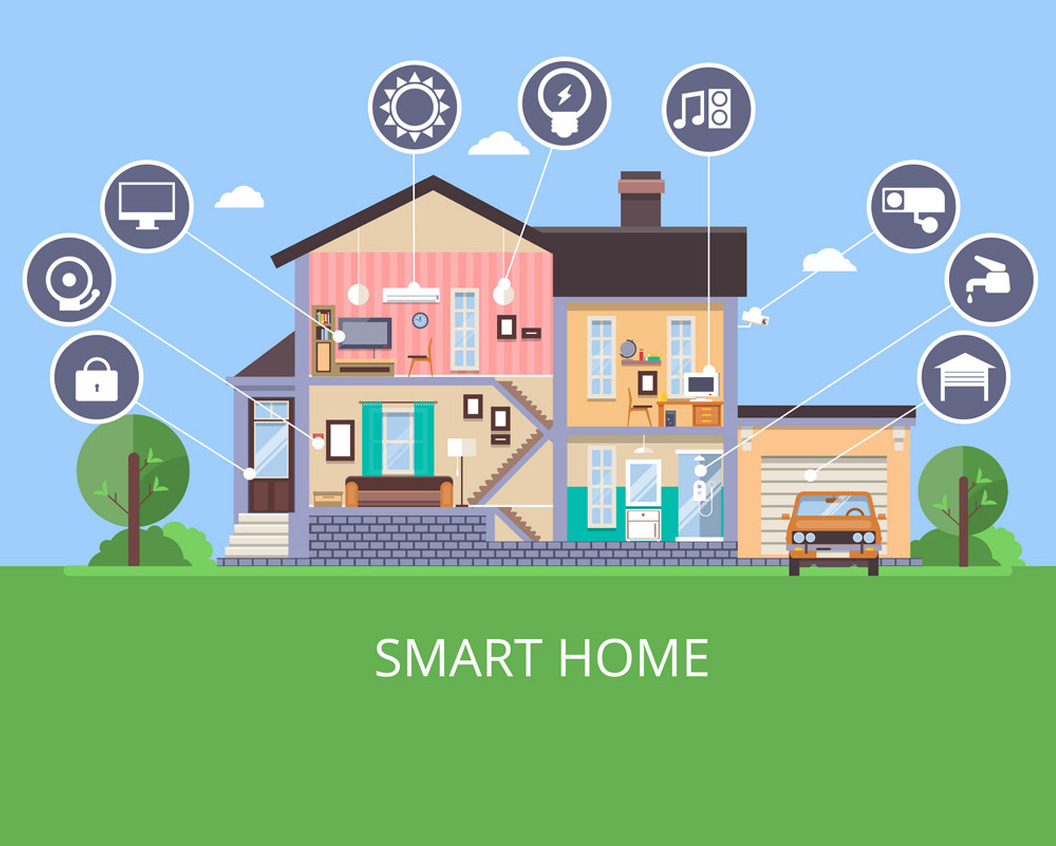
- Smart homes: controlling lights, thermostats and other appliances, and monitoring the security of a home.
- Connected cars: monitoring the performance of a car's engine, tracking its fuel efficiency, and detecting potential safety hazards.
Smart homes and smart businesses
Here are five reasons why people are now investing in smarter homes — and why companies want smart technology installed.
- Convenience and efficiency. Smart homes can automate many tasks, saving time and effort. Smart thermostats can adjust the temperature automatically based on schedule and preferences, while smart lights can turn on and off according to the time of day or whether anyone is present.
- Energy savings. Smart homes can help save money on energy bills by monitoring and adjusting energy consumption. Smart thermostats can learn habits and adjust the temperature accordingly, while smart appliances can be programmed to run during off-peak hours when energy rates are lower.
- Improved security. Smart homes can be equipped with security systems that are monitored remotely, providing peace of mind. Smart cameras can record activity around the property, while smart door locks can be controlled remotely, allowing doors to be locked and unlocked from anywhere.
- Enhanced comfort. Smart blinds can be adjusted to control the amount of sunlight entering the building, while smart speakers can be used to play music or listen to audiobooks.
- Personalised experience. Smart homes can be customised to suit individual needs and preferences. Smart thermostats can be programmed to adjust the temperature based on health or activity level, while smart lights can be set to change colour and brightness based on mood or activity.
In addition to these benefits, smart technology is becoming increasingly affordable and accessible. With the growing popularity of smart devices and the development of new technologies, smart homes are poised to become the standard for future homes.
Smarter everything
Sales lines are open 9:30 to 5:30 and critical support is available 24/7. Contact us for any service not listed on this page.